
ISHMEET KAUR MAC
HISTORICAL SIGNIFICANCE OF HORMUZ AREA
Since ancient times, the area of Hormuz has been a part of geopolitical significance and subjected to conflict. Earlier it was known as ‘Bab as-Salam’ meaning ‘Gate of Peace’. The sailors used the strait to travel between Mesopotamia, Persia, Arabia and India that made it an important centre of trade and cultural exchange. By the 10th century , it gained prominence and the city of Hormuz became a major trading centre as the merchants from Arabia, India, East Africa and China passed through the region trading goods such as spices, textiles, pearls and precious metals. Medieval Islamic geographers, including the tradition who were associated with Al- Idrisi documented the Persian Gulf and the surrounding maritime routes. The European cartographers produced increasingly detailed maps as European powers became interested in the Indian Ocean trade.
During the 16th century there was a conflict between the Portuguese and the Ottoman Empire , both wanted control over the strait because of its trade and military movement and access to the Persian Gulf. In the year 1515, the Portuguese captured the Hormuz and built their fortifications to control important trade routes. The Ottoman wanted to test the Portuguese dominance and expand their influence toward the Indian Ocean. They strengthened their control in Basra in the year 1546 and began preparing naval campaigns against the Portuguese. In 1552, Ottoman admiral Piri Reis launched a major expedition with a fleet from the Rede Sea. He captured Muscat and attacked Hormuz, but he failed to establish lasting control. In the year 1553- 54 the Ottomans made further attempts but the Portuguese naval forces defeated them. Their dominance ended in the year 1622, when Safavid Persion forces, supported by the English East India Company, expelled them.
During the 18th and 19th century , European and regional powers continued to compete for influence in the area. Improvements in navigation and cartography also made the Strait more accurately represented on maps. Today , the Strait of Hormuz is one of the world’s most important energy and trade bottlenecks. Its historical role as a gateway for trade has evolved into its modern role as a crucial route for oil, LNG and global maritime commerce.
THE 2026 HORMUZ CRISIS
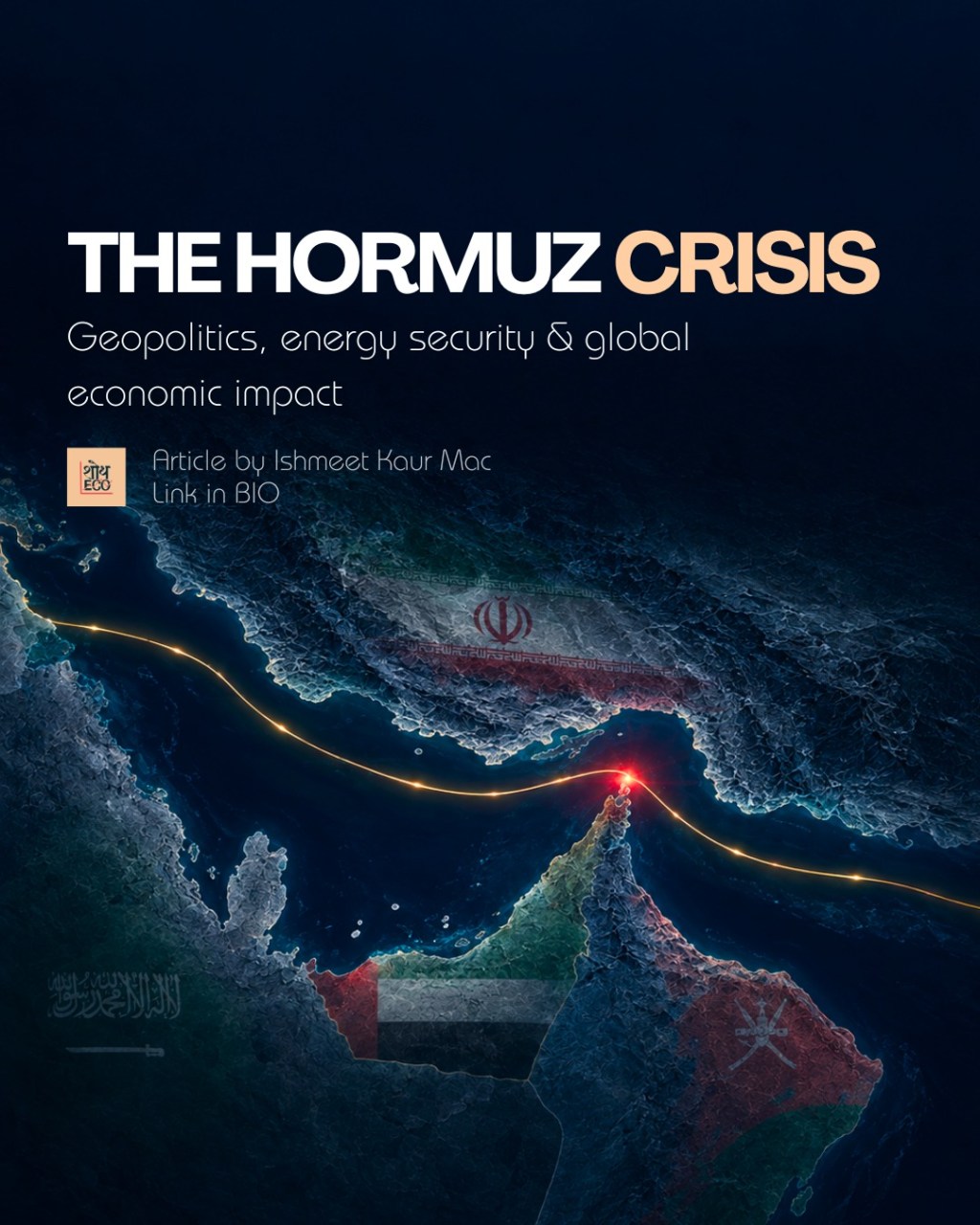
The current strait of the Hormuz crisis began as a part of the broader conflict between Iran, Israel and the United States. After US and Israeli strikes on Iran on February 28, 2026. In response, Iran began restricting shipping through the Strait of Hormuz, a vital route through which around one-fifth of the world’s oil and LNG supplies pass. This act led to a hike in the oil prices,shipping cost and inflation.
The United States responded by increasing military pressure and attempting to secure maritime access and Iran restricted the shipping. It has created a significant global economic shock. The strait normally used to carry Due to its military 20% of global petroleum supply and up to 30% of global LNG, but early July 2026 the global escalation daily ship transits fell from an average 129 ships between 1-27 February 2026 to handful ships, disrupting the global energy and supply chains. Oil and gas markets reacted immediately to deal with crude rising $90 per barrel and gas price increasing sharply, raising cost of transportation, freight, insurance and production.Higher energy and transport cost also increased fertilizer and food. Countries like Sudan, Sri Lanka, Pakistan , Tanzania and Kenya have significant shares of fertilizer imports originating from the Persian Gulf region, making them more vulnerable to prolonged disruptions. It increased the borrowing cost as higher bond yields make it more expensive for the government contributing to the fiscal deficit. These economic consequences are linked to growing geopolitical and legal confrontation over who has the right to control the strait.
The other dimension of the crisis is geopolitical and legal. Iran has attempted to use the Strait as a strategic bargaining tool, while the United States has maintained military pressure and naval blockade against Iran. President Donald Trump’s statement that he could declare the strait US territory has further intensified the controversy. But such a move would face significant legal and practical obstacles because sovereignty over territory cannot simply be transferred through a presidential announcement. The strait between Iran and Oman and international maritime law provides rights of navigation through international straits. Although Iran and the United States have not ratified the UN Convention on the Law of the Sea, many of its principles concerning international navigation are considered part of customary international law. Thereby, the Hormuz crisis is not only an economic shock caused by the disrupted energy supplies, it has a broader aspect and it is also a struggle over sovereignty, freedom of navigation, international law and regional security.
For ASEAN, the impact is particularly serious because 56% of its crude oil imports came from the Middle East in 2025. ASEAN needs around 5 million barrels of oil per day but produces only about 2 million, creating an import gap of roughly 3 million barrels per day. The disruption has increased the region’s energy import costs by around US$3.36 billion per month.
The crisis has affected countries differently. Vietnam has 85% oil import dependence , Singapore 77%, Thailand 69% and the Philippines 52%.The Philippines is particularly vulnerable importing 98% of its oil from the Middle East, while Singapore has a much stronger buffer with strategic reserves covering more than 200 days.
Overall, the crisis shows ASEAN’s high dependence on imported fossil fuels and limited strategic reserves. Rising energy costs can increase food prices, inflation and fiscal pressure, while countries are now being used to diversity suppliers, increase strategic reserves and accelerate renewable energy. ASEAN aims for 30% renewable energy supply and 45% renewable installed power capacity by 2030.
On 17th June 2026, US – Iran Memorandum of Understanding(MOU) was a 14 point ceasefire agreement brokered by Pakistan. It started a 60 day period of peace negotiations and it aimed to stop military operations between the two sides. It concerned the Strait of Hormuz. Iran agreed to allow commercial ships to pass safely to pass freely for a span for 60 days, while also clearing mines and discussing future administration of the Strait with Oman and other Gulf countries. It ended military operations, sanctions relief, access to the frozen Iranian funds and proposed a $300 billion reconstruction and development package for Iran. On 17th August 2026, without producing a permanent peace agreement. Iran’s nuclear programme and the broader regional conflict caused the agreement to break down.
Because of the crisis , India’s energy sector has been affected and in the first quarter of the financial year, India’s crude oil import bill rose by over 60% year-on-year, despite a slight decline in the import volumes. India’s net oil and imports increased by 45% signifying the country’s vulnerability to global energy shocks. It is important because India imports over 88% of its crude oil requirements and around 50% of its natural gas consumption. But it remains a net exporter of petroleum products because of its large refining capacity even though it continues to import products like LPG.
In conclusion , the Hormuz crisis demonstrates how a single strategic waterway has consequences and affects the global economy. Rising prices of energy,inflation and supply disruption highlight the urge for countries to strengthen their energy sources and invest in renewable energy.
REFRENCES:
https://unctad.org/publication/strait-hormuz-disruptions-implications-global-trade-and-development
https://www.orfonline.org/research/asean-s-energy-vulnerability-and-the-impact-of-the-hormuz-crisis

