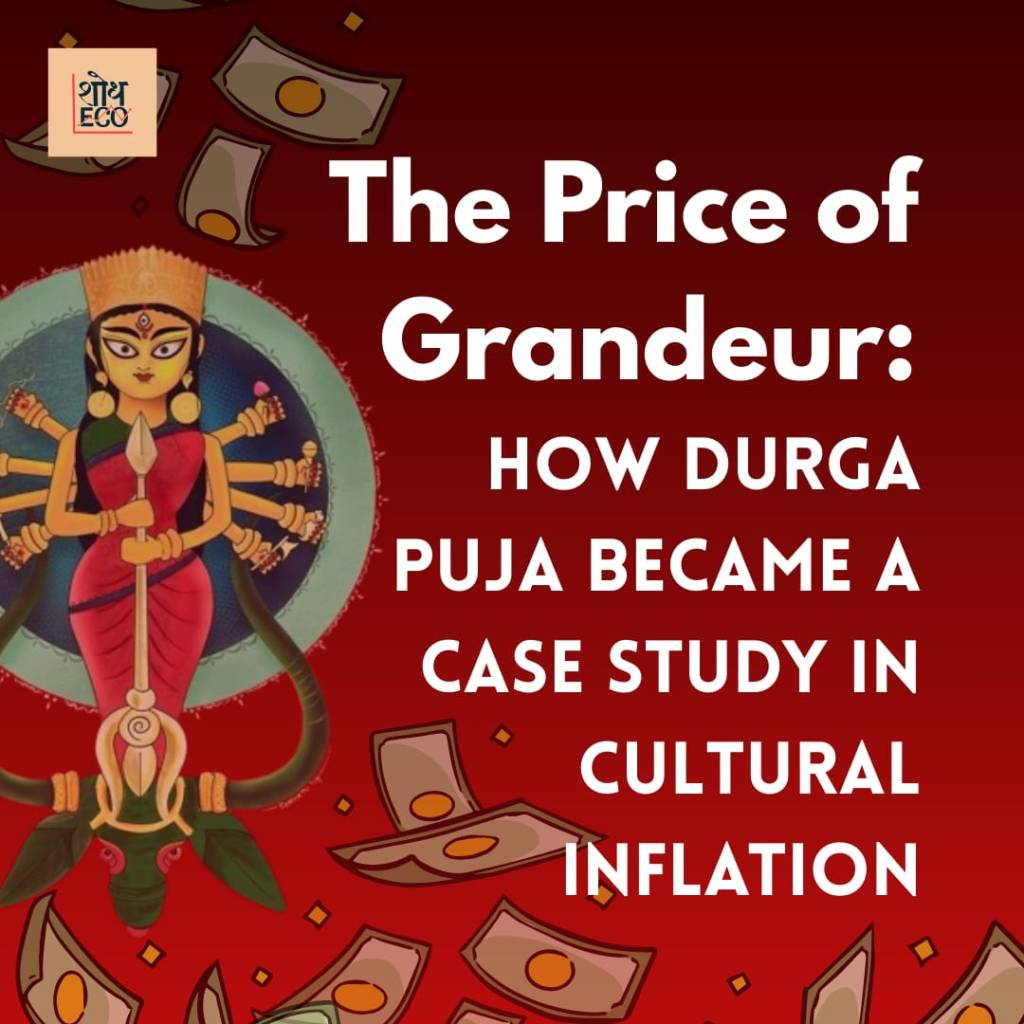

Durga Puja is no longer just a festival. It is an economy, a seasonal boom that fuels jobs, spending, and competition across Kolkata. What began as a community celebration has evolved into a multi-crore ecosystem of artistry, branding, and spectacle. And like every fast-growing market, it now faces its own version of inflation.
From Ritual to Runway
Not long ago, Puja celebrations truly began on Shoshthi, the sixth day of the festival. The excitement was local and gradual, with artisans finishing the idols, families planning pandal routes, and children counting down to holidays.
Today, the buildup starts as early as Mahalaya. Pandal themes are teased like film trailers, sponsors roll out advertisements, and social media pages start their campaigns. The festival has absorbed the language of commerce, complete with pre-launches, brand tie-ins, and influencer engagement.
What was once about faith and community now behaves like a market.
When Culture Mirrors Inflation
In economics, inflation means rising prices and eroding value. In culture, it means a race for bigger, flashier, and costlier experiences. Each year, Puja budgets soar, themes become more elaborate, and the city spends more to feel the same sense of wonder.
This is a form of positional competition. If one committee builds a rotating pandal, the next one must create something even more elaborate to attract attention. Costs keep rising, but the emotional return often stays the same.
Thorstein Veblen might have called this conspicuous celebration. Spending becomes a signal of status, a way to display success rather than devotion. The festival turns into an economy of attention, where visibility, not reverence, is the measure of success.
Winners, Losers, and the New Marketplace
Behind the glitter is a complex value chain. Corporate sponsorships have replaced community donations as the main source of funding. Big-budget committees dominate headlines and attract crowds, while smaller neighborhood Pujas struggle to stay relevant.
The festival sustains thousands of livelihoods: idol-makers from Kumartuli, electricians, artisans, and decorators. Yet their earnings remain uncertain, even as total spending reaches new highs each year. Cultural inflation, much like economic inflation, widens inequality.
There is also an environmental cost. The scale of resource use, waste, and electricity consumption grows every year. The celebration gets louder, brighter, and less sustainable.
The Economics of Restraint
Growth without reflection is easy. Sustainable growth takes effort. Durga Puja’s economy could thrive more equitably if resources were shared, artisan wages made fairer, and creativity valued over spectacle.
The festival still unites Kolkata like nothing else. It still generates joy, work, and pride. But it also shows how even culture is not immune to the logic of markets. Cultural inflation reminds us that value, whether economic or emotional, cannot keep rising forever. At some point, meaning begins to cost too much.
 ShodhEco