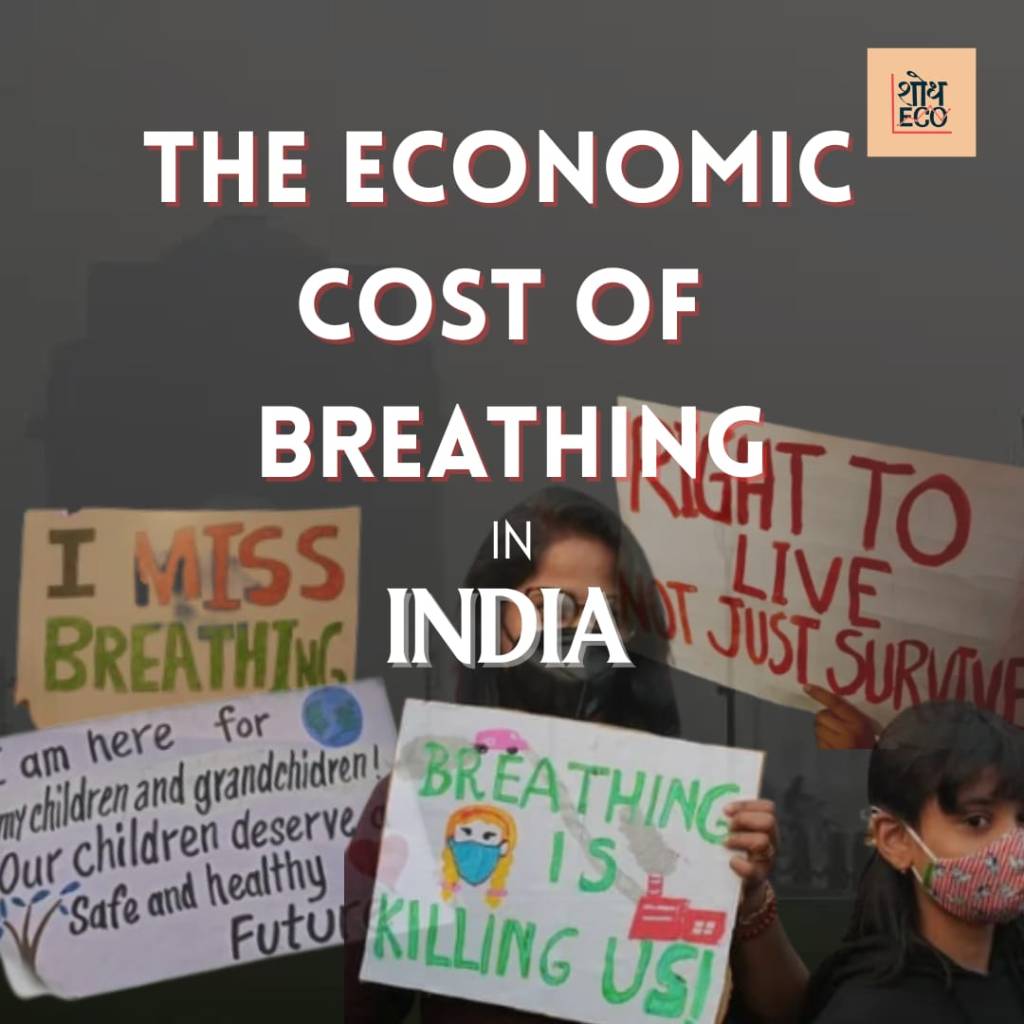

Every winter, the haze returns like clockwork. Flights are delayed, schools close, and the skyline disappears into a grey blur. We talk about masks and air purifiers, but the real cost of pollution is not visible. It is measured in lost workdays, lower productivity, and the quiet erosion of human capital that drives India’s growth.
A study published this year by the Energy Policy Institute at the University of Chicago estimated that air pollution shortens the average Indian’s life expectancy by 5.3 years. In Delhi, it is almost twelve years. Behind those numbers lies an economic story. When pollution makes people sicker and shortens their lives, it weakens the country’s most valuable resource: its people.
A silent productivity crisis
India’s economy still relies heavily on people showing up. Whether it is factory workers, drivers, delivery staff, or office employees, much of our productivity comes from physical presence. Polluted air reduces that reliability. Respiratory problems, fatigue, and heart ailments lower work output and increase absenteeism. In heavily polluted months, companies in northern India quietly report more sick leaves and reduced efficiency. None of this appears in quarterly GDP data, but over time it shows up as slower growth and lower incomes.
For children, the damage starts early. Studies link long-term exposure to fine particulate matter (PM2.5) with weaker cognitive performance and reduced concentration. The World Bank has repeatedly shown how pollution lowers learning outcomes and future earning potential. When an entire generation grows up breathing air that weakens their focus and health, it affects the quality of India’s future workforce.
A drag on a service-led economy
India’s comparative advantage is shifting toward services and knowledge industries. That makes the cost of pollution even heavier. A manufacturing slowdown can be measured. A decline in mental sharpness or energy among workers cannot. Air pollution does not just harm lungs; it blunts the human edge that India’s economy depends on.
The smog may seem seasonal, but its effects are not. The pollution peaks in winter, yet its impact lasts all year through weakened health and lower productivity. This is not just a “Delhi problem.” It is a national economic risk that touches every state in one way or another.
The ripple effects
Pollution also imposes direct costs on business. Every winter, airports in the north face hundreds of delays and cancellations because of poor visibility. In late 2024, Delhi’s main airport had to divert or cancel nearly 500 flights in a single week. Such disruptions ripple across logistics, tourism, and supply chains. Construction slows, and transport becomes unpredictable.
Healthcare costs are another major burden. A recent Lancet study estimated that diseases linked to air pollution cost India over 1.4 percent of its GDP each year through treatment expenses and productivity losses. The poor are hit hardest since they lack both clean air and access to healthcare. Pollution deepens inequality and traps vulnerable households in cycles of poor health and low income.
The policy blind spot
India has made progress with schemes like the National Clean Air Programme and tighter emission standards, but policy still treats pollution as an environmental issue rather than an economic one. That approach is outdated. Clean air should be seen as essential infrastructure, just like roads or electricity.
Economists often talk about total factor productivity, the efficiency with which labour and capital are used. Air pollution quietly reduces both. It weakens workers and damages equipment. The simplest productivity reform India can make is to improve the quality of the air its people breathe.
Breathing room for the economy
The danger is not only that India’s skies are turning greyer each year, but that the economy has begun to accept it as normal. Companies adjust their schedules, citizens adapt, and governments move on once visibility improves. Yet each winter adds another layer to a slowdown that cannot be fixed with fiscal stimulus or monetary policy.
Clean air is not just a public good. It is an economic stabiliser, a health investment, and a growth multiplier. The longer India waits to recognise that, the more it will lose in potential. The cost of pollution is not only in the air around us. It is in the hours not worked, the students not learning, and the years of life quietly disappearing from the nation’s balance sheet.
 ShodhEco