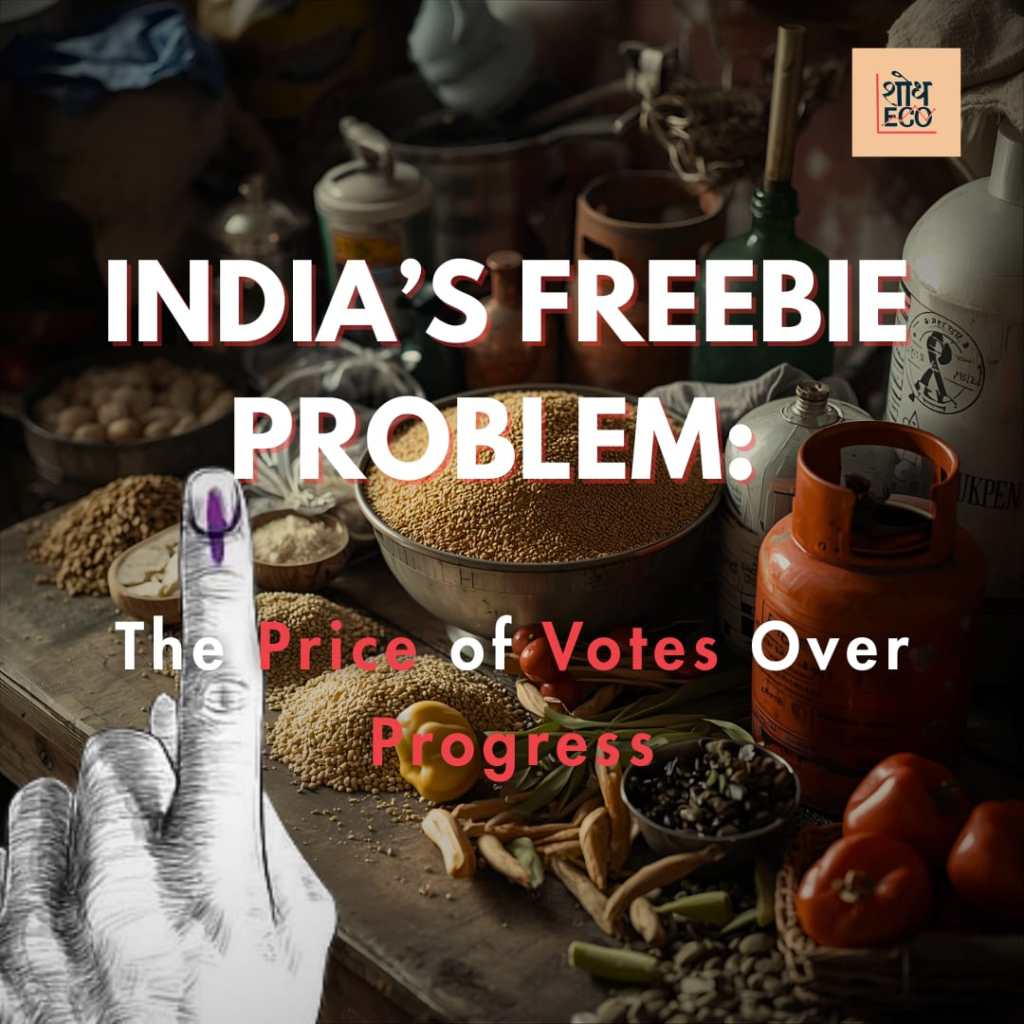

Every democracy faces a tension between what wins elections and what builds nations. In India, that tension has taken the form of “freebies.” From free electricity to loan waivers, from free food grains to laptops and cycles, governments at both the Centre and the States have turned giveaways into political weapons.
While they may bring short-term relief to citizens and long-term benefit to politicians, they come at an enormous cost to the country’s future. Each year, India spends ₹7–10 lakh crore on subsidies and freebies — nearly 20% of the total national budget.
Now consider what that money could do if redirected into the real challenges we face: education, infrastructure, civic sense, women’s empowerment, and preventive social measures like sex education. The comparison is startling.
—
Education: The Most Neglected Investment
India spends just about ₹1.3 lakh crore a year on education. That’s less than one-fifth of the freebies budget. The result is visible everywhere: overcrowded classrooms, crumbling school buildings, underpaid teachers, and poor learning outcomes.
Redirecting even a portion of freebie spending could transform the sector. Imagine if every school had modern classrooms, digital learning tools, trained teachers, and safe transport. Higher education could expand access, skill training could prepare the youth for jobs, and India could actually reap its “demographic dividend” instead of letting it go to waste.
Education is not charity; it is nation-building. Yet, in our budgets, it is consistently treated as secondary to populism.
—
Infrastructure: Building Roads or Building Votes?
Infrastructure spending is substantial on paper — around ₹10 lakh crore in capital expenditure. But this covers everything from defense to urban development, leaving road quality, public transport, and housing underfunded in many regions.
Meanwhile, freebies swallow up a similar amount without leaving behind a single road, bridge, or railway line.
The irony is clear: every rupee spent on a free TV today could have built a meter of road that lasts for decades. Good infrastructure doesn’t just beautify; it boosts economic activity, reduces travel time, lowers logistics costs, and creates jobs. Freebies vanish in a year; roads remain for generations.
—
Civic Sense: India’s Silent Crisis
Civic sense — cleanliness, traffic discipline, environmental responsibility — is rarely discussed, but it shapes daily life. India spends barely ₹50,000 crore on sanitation, cleanliness campaigns, and road safety combined. That’s less than 1% of what goes to freebies.
The result is evident: littered streets, chaotic traffic, rising pollution, and poor public hygiene. Instead of teaching citizens civic responsibility through large-scale awareness campaigns, strict enforcement, and infrastructure like waste management systems, governments prefer short-term giveaways.
If just a fraction of freebies were redirected, we could have cleaner cities, better waste segregation, safer roads, and an environment that fosters pride in public spaces. Civic sense is the foundation of a disciplined society — one that no amount of free handouts can create.
—
Women Empowerment: Beyond Slogans
India’s women face some of the greatest challenges in the world — from unequal access to education and jobs, to harassment and violence. Yet, women empowerment schemes get only around ₹25,000 crore a year. Compare that to ₹7–10 lakh crore in freebies.
This imbalance is tragic. Investing in women’s education, skills, safety infrastructure, and financial independence creates ripples across families and communities. Women who are empowered raise healthier children, contribute to the workforce, and strengthen the economy.
Instead, our politics often treats women as vote banks to be wooed with free gas cylinders or one-time cash transfers — gestures that may provide temporary relief but do not build long-term empowerment.
—
Sex Education and Rape Prevention: A Missed Opportunity
India’s rising crimes against women highlight another failure: the absence of meaningful investment in sex education and preventive measures. Budgets here are shockingly low — under ₹5,000 crore annually.
Proper sex education in schools, community awareness programs, counseling services, and mass campaigns on consent and gender equality could reshape social attitudes. Combined with better policing and judicial efficiency, it could prevent tragedies before they happen.
But none of this gets priority in a system where freebies dominate. Free power may light homes, but it does not light minds.
—
The True Cost of Freebies
It is tempting to argue that freebies are necessary to support the poor. But the real question is: are we giving people what they need, or what wins elections?
Free food fills stomachs today; education fills minds forever.
Free electricity powers homes today; infrastructure powers economies for decades.
Cash handouts disappear in months; civic sense builds a civilized society.
Loan waivers fade in a season; women empowerment strengthens generations.
NOTE: The views expressed in this post are those of the author and do not necessarily reflect the views of ShodhEco.
 ShodhEco