Introduction

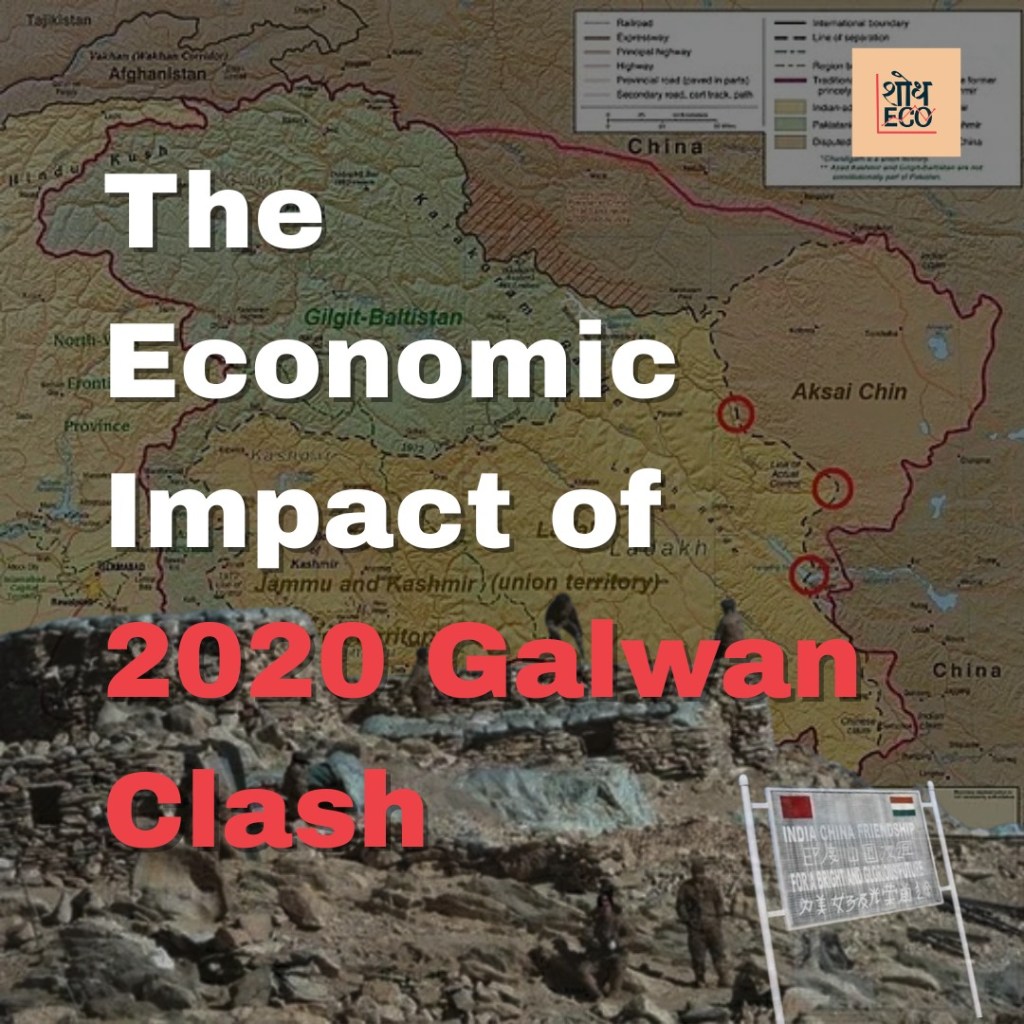
India and China have disputed their 3,488-kilometer border for over seventy years.Despite numerous talks and agreements, tensions have persisted along the disputed boundary. The June 2020 Galwan Valley clash marked a major turning point, becoming the worst fighting in 45 years with soldiers dying for the first time since 1975. The confrontation occurred when Chinese forces built permanent structures in areas where Indian soldiers usually patrol, leading to hand-to-hand combat that killed 20 Indian soldiers and several Chinese soldiers.
Impact on Trade
The border tensions had immediate effects on trade between the two countries. The data shows how bilateral trade was affected:
| Year | 2018-19 | 2019-20 | 2020-21 |
| Import ($ billion) | 70.32 | 65.26 | 65.21 |
| Export ($ billion) | 16.75 | 16.61 | 21.19 |
| Total trade ($ billion) | 87.07 | 81.87 | 86.40 |
| Trade deficit ($ billion) | 53.57 | 48.65 | 44.02 |
From January to mid-2020, Chinese exports to India dropped 24.7% while India’s exports to China increased 6.7%, with total bilateral trade falling 18.6%. The data shows two important changes: India kept selling more goods to China while buying less from China, which reduced the trade deficit.
Foreign Direct Investment (FDI) Changes
Investment flows between India and China changed dramatically after 2020. Chinese FDI in India fell sharply from $534.60 million in 2019 to $205.19 million.This decline resulted from India’s revised FDI policy implemented in April 2020, which requires government approval for all investments from border-sharing countries. Policy officially aimed at preventing opportunistic takeovers during COVID-19, effectively created a mechanism to block potentially sensitive Chinese investments, marking a clear departure from India’s traditionally open FDI regime.
Infrastructure Development in Northeast India
The 2020 clash accelerated India’s infrastructure development in northeastern states near the Chinese border. The government increased funding for border roads, bridges, and communication networks in Arunachal Pradesh and Assam through the Border Area Development Program.. These infrastructure investments served dual purposes – strengthening defense capabilities while boosting economic development in one of India’s least developed regions by better connecting the northeast with the rest of the country.
Reasons for Economic Changes
The 2020 border clashes led to major policy changes across different sectors:
● Digital and Trade Sector- over 200 Chinese apps including tiktok were banned for data security reasons,which affected the companies as they had huge user base in india. Indian startups started looking for funding from Indian and other foreign investors instead of Chinese ones.The government took several steps to reduce dependence on China- Imposed anti-dumping duties and other trade restrictions on Chinese products, created quality control orders to stop low-quality imports ,focused on building India’s own manufacturing capabilities,started sourcing supplies from other countries.
● Production Linked Incentive (PLI) Schemes
India launched PLI schemes to boost domestic manufacturing in sectors such as Electronic components and mobile phones, Pharmaceuticals, Drones and drone parts which are highly dependent on imports from china.These schemes offered financial incentives to companies willing to manufacture in India,building India’s own industrial capacity.
Overall Economic Impact
The trade disruption had broader economic effects beyond bilateral numbers. While imports from China decreased, this hurt Indian export industries that depended on Chinese raw materials, with overall exports declining from $41.45 billion to $41.15 billion as manufacturers faced higher input costs and sourcing delays. Interstingly,Consumer Price Index (CPI) increased by 2-3% above trend levels, particularly for electronics and household goods, while Wholesale Price Index (WPI) remained relatively stable due to government interventions and alternative industrial sourcing,this showed domestic implication of the border tensions. However, the policy response showed measurable success – domestic production in PLI-targeted sectors increased by 15-20% by 2022, manufacturing GDP growth in electronics and pharmaceuticals initially decelerated but recovered as alternative partnerships with Vietnam and South Korea grew by over 30%, demonstrating that while economic decoupling imposed short-term costs, it successfully began reducing strategic vulnerabilities in critical sectors.
Change In Response
The 2020 response was completely different from how India handled similar tensions before. In 1987, when China occupied territory in Arunachal Pradesh, India only used diplomacy to solve the problem and kept trade relationships normal. But in 2020 after Galwan, India’s main response was economic – banning Chinese apps, restricting investments, and changing trade policies within weeks of the clash. This shows how India’s strategy evolved from separating economics and politics to using economic tools as weapons. It demonstrates India’s confidence that it could afford to impose costs on even its biggest trading partner when national security was threatened
Conclusion
The 2020 Galwan Valley clash marked a turning point in India-China economic relations. What started as a border dispute led to comprehensive changes in trade patterns, investment flows, and industrial policies. The broader effects on trade and inflation revealed India’s high dependence on China, making these policy changes even more significant. India’s response showed a clear shift from separating economics and politics to using economic tools as part of its strategic response to Chinese actions. The focus on building domestic manufacturing capabilities and infrastructure in the northeast suggests these changes are likely to continue long-term.
 ShodhEco