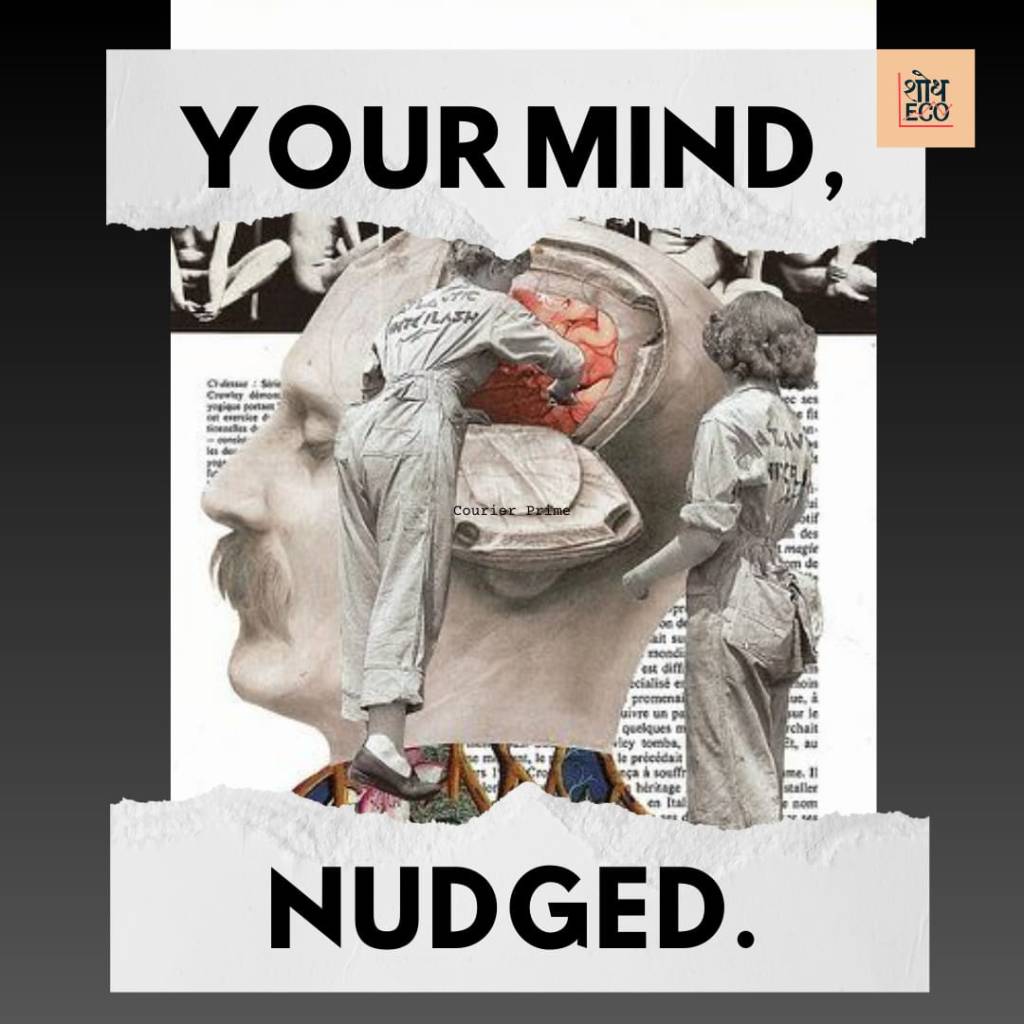

Have you ever proceeded to buy an item from different online stores or e-commerce websites after scrolling through the first few positive reviews? This situation is exactly the Nudge Theory playing out in real life.
Nudge theory suggests that when given two alternatives, people tend to choose the option that is easier and more convenient, rather than one that could lead to better outcomes. In this context, a ‘nudge’ is essentially a small push that guides people to make decisions that most benefit them in the long term.
The Nudge Theory is a decision-making framework brought to prominence in 2008 by economist and Nobel Prize winner Richard Thaler and Cass Sunstien in their appropriately titled book, “Nudge: Improving Decisions about Health, Wealth and Happiness.
Nudges can influence behavior in a number of ways, including (a) supplying information, (b) clearing up misunderstandings about certain social norms, (c) changing the way options are displayed. Making positive decisions that promote long-term health, financial stability, and well-being is the fundamental objective of these interventions.
According to Thaler and Sunstein, nudges work well because they assist in resolving common cognitive biases and mistakes, especially when choices are made hastily or with little thought. Nudges aren’t just for everyday activities; they can also support complex decisions by reducing cognitive load and help individuals make better-informed choices
SWOT Analysis of Nudging
Strengths: Nudge theory’s strengths lie in its political and ethical appeal. It aligns with free-market principles, making it attractive in contexts where heavy regulation or fiscal interventions are less viable. By addressing cognitive limitations in decision-making, nudging helps individuals make better choices while preserving their autonomy. Its dual role- supporting vulnerable individuals while allowing knowledgeable people freedom of choice- enhances its ethical credibility. Moreover, nudging can function as a preventive tool, gradually shaping behaviors and attitudes in ways that prepare the ground for stronger regulatory action if needed.
Weaknesses: Despite these advantages, nudging has notable weaknesses. There is limited long-term evidence of its effectiveness and cost-efficiency, and scaling nudges from controlled environments to large, diverse populations is highly challenging. Nudges also require significant customization and often lose effectiveness over time as people adapt or interpret them differently. Without reinforcement, their impact tends to fade quickly, meaning policymakers must develop a deep understanding of their target groups for nudges to work effectively.
Opportunities: The opportunities for nudging are considerable, particularly through the integration of digital technologies. Persistent, well-designed nudges can deliver cost-effective results over time, and the use of smartphones, wearables, and other ICT tools makes interventions more personalized, scalable, and interactive. Features such as real-time feedback and social comparison encourage individuals to take greater accountability for their choices, especially in health and lifestyle contexts. Policymakers can also apply nudging both directly, by shaping choice environments, and indirectly, by promoting its use among businesses, NGOs, and civil society organizations.
Threats: However, nudging also faces significant threats. Ethical concerns about manipulation, lack of transparency, and erosion of public trust are central criticisms. Nudges often work best when unnoticed, yet this lack of awareness raises questions about autonomy and democratic principles. Critics also highlight the risk of unfairness, as nudges may disproportionately influence less educated or vulnerable populations, potentially worsening inequality. Finally, there is the danger that governments may over-rely on nudging as a politically acceptable but insufficient substitute for stronger regulatory measures. At the end of the day, nudges are all around us, whether it’s online reviews swaying our purchases or apps reminding us to drink more water. They show that small pushes can lead to big changes, helping us make choices that are often better in the long run. But nudges aren’t perfect; they can fade over time or raise questions about fairness and transparency. The real trick is using them wisely, so they guide us without taking away our freedom to choose.
Sometimes, all we need is a little nudge to make the right choice.
 ShodhEco