
One fine day in the land of culture, and revolution: Bengal, an unsuspecting and unnamed sub inspector was fulfilling his duty, armed with a revolver and a standard issued rifle. All of a sudden, he was attacked by 2 men who in an odd attempt tried to snatch his rifle and revolver away from him. This unfortunate encounter ended fatally for the sub inspector who was shot dead while the three men fled away with his weapons. The act was overlooked and seen as a usual instance of crime. However, little did anyone know that this was the beginning of something much bigger and unfathomable. This particular incident of rifle snatching was one of the first acts of violence by the Naxals.
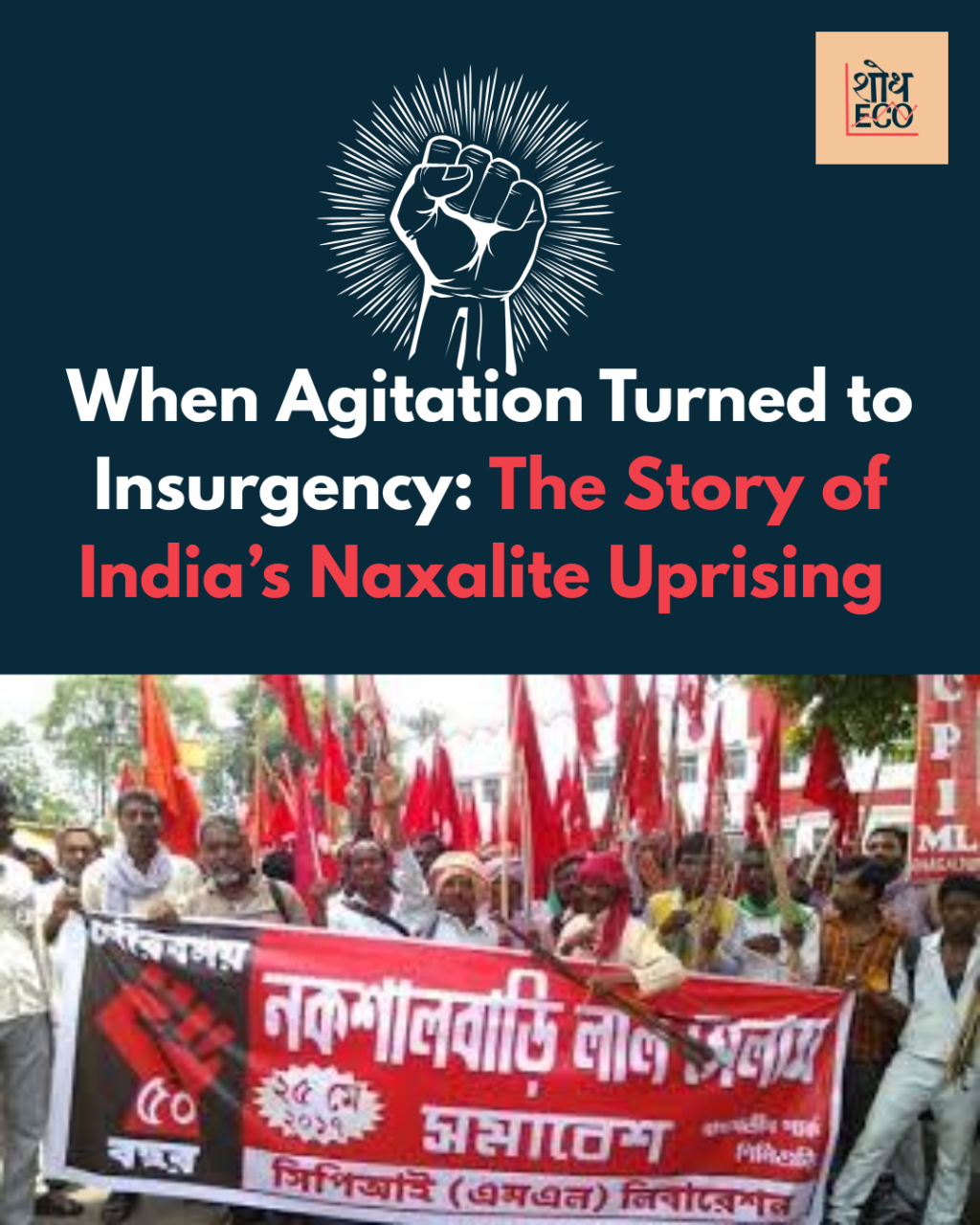
18th May 1967 marked the beginning of a new movement in the village of Naxalbari, one that would haunt Bengal and the rest of the country for decades to come. The Naxalite movement was started by angry tribals who demanded freedom and accountability. Agitations were nothing new, especially not in Bengal. However, this time the angered agitators and protestors adopted extreme means to solve their problems. They started by snatching land from the lords, and refusing to comply. What began as a tribal struggle was eventually hijacked by the communists and a new movement was born. The Naxalite movement was led by a faction of the communist party C.P.I.-M.L. which was led by Charu Majumdar at the time. As enthusiastic as Majumdar was about leading the insurgency, neither did he have the means, nor the arms for carrying out a full-fledged revolution. As a result, Majumdar encouraged his fellow revolutionaries to take matters into their own hands and to commit arbitrary acts of violence such as rifle-snatching, targeted killings, robberies etc. Majumdar not only fought with farmers, and tribals, but he also exploited the ongoing student movements in Kolkata. Students angered by the establishment were further instigated and the student protests were given a political shape and radicalized further. A sort of cultural revolution was carried out in Kolkata, perhaps in an attempt to imitate China’s cultural revolution. Students took down the statue of Mahatma Gandhi and rioted on the streets among other actions.
Majumdar’s reign however, didn’t last long. In 1970, a warrant for Majumdar’s arrest was issued and he went on the run. In the meantime, he sent Saroj Dutta to China as a representative of the party, to seek support from the Chinese State. Although never confirmed, it is widely said that the Chinese government provided aid and support to the Naxals. Now, while that may be true; it has been confirmed that initially the Chinese government refused to support Majumdar’s cause citing multiple reasons. The Chinese believed that Majumdar’s movement was inefficient and unorganized. Allegedly, they also had their own doubts about the sincerity of the Naxals to the Maoist belief. Needless to say, Dutta returned to India empty handed and soon after in 1971 he disappeared and has been presumed dead ever since. The hail Mary thrown by Majumdar went in vain and subsequently, he was arrested in 1972 and met his demise while in custody of the state.
The aftermath of Majumdar’s death marked the beginning of the second phase. The state and the bureaucracy were relieved at his death as they believed that the movement would die off with him but the peace was short lived. Although major arrests were made, multiple encounters took place, and the Naxalite movement was brutally repressed by the state; unfortunately, this wasn’t enough. These deaths of major Naxal leaders ignited a spark throughout the country as insurgencies spawned in every part. It was at this very moment when Agitations turned into Militancy and the Naxalite movement turned into an insurgency.
 ShodhEco