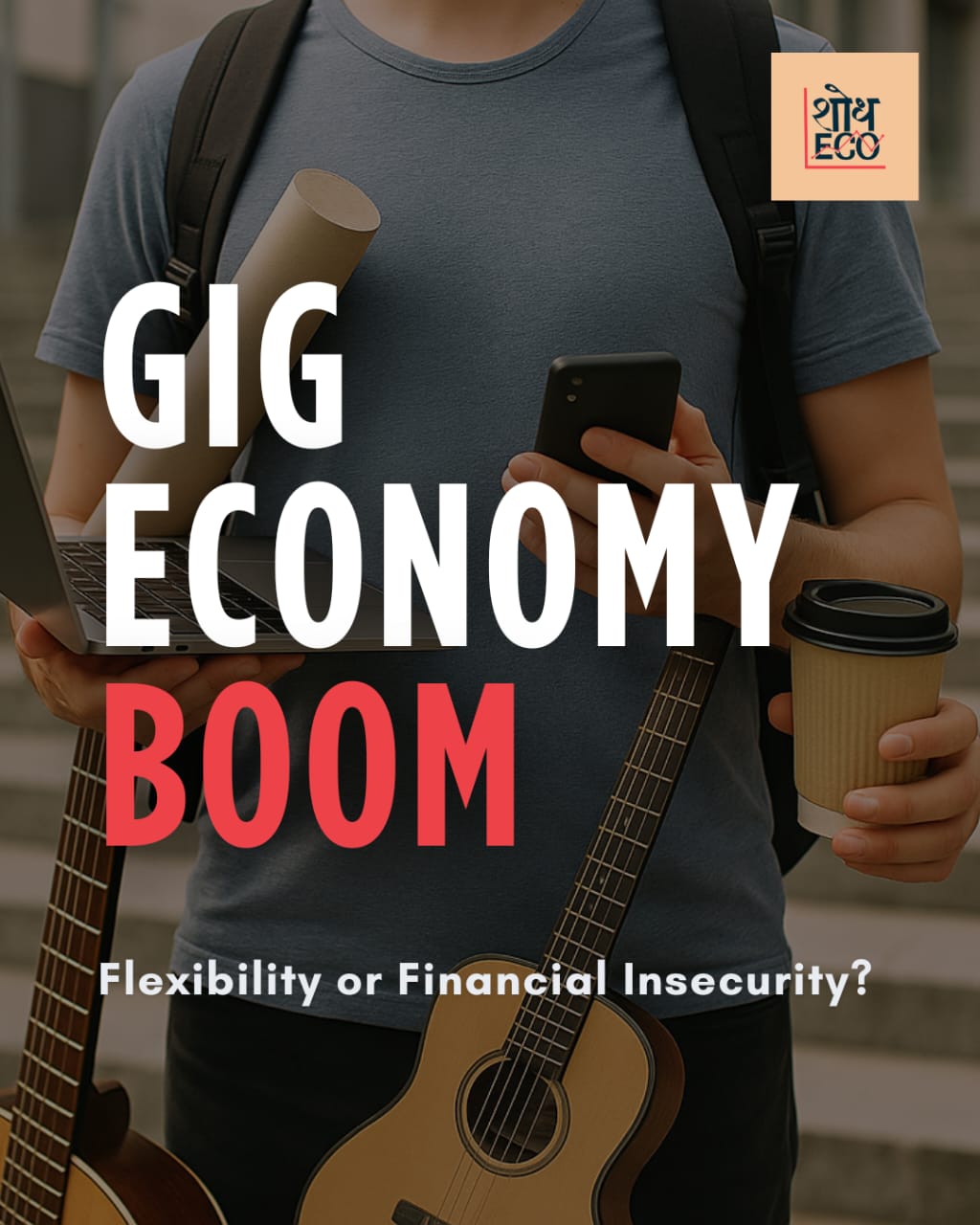

Every morning, Arjun, a resident of Pune, opens multiple apps on his smartphone switching between tasks as a food delivery partner, a ride-hailing driver, and a freelance graphic designer. He doesn’t have a conventional boss, fixed hours, or even a physical office. What he does have is the freedom to decide when he wants to work, take breaks at his convenience, and manage his own schedule. Arjun is just one of the many Indians navigating the evolving landscape of the gig economy.
The gig economy refers to a work model where individuals engage in short-term, freelance, or contract-based roles instead of holding permanent, full-time jobs. Powered by digital platforms, it allows service providers to directly connect with customers for tasks like food delivery, transportation, home rentals, and creative work. In India, platforms such as Swiggy, Zomato, Uber, Airbnb, Upwork, and Fiverr are driving this trend forward.
In recent years, the gig economy has seen remarkable expansion across India. As per a report by NITI Aayog, approximately 7.7 million gig workers were part of the workforce in 2020-21. This number is projected to triple to 23.5 million by 2029-30, accounting for 4.1% of the country’s total workforce. Moreover, the gig sector is expected to contribute 1.25% to India’s GDP and add around 16 million jobs, significantly enhancing employment prospects and income opportunities.
The rapid growth of gig work highlights one of its most attractive features of flexibility. Gig workers often have the freedom to decide when, where, and how much they want to work. This model especially benefits students, homemakers, and individuals looking to earn extra income. For instance, someone might drive for a ride-sharing service on weekends while attending college during the week. This level of control over work schedules allows for better personal and professional balance, a feature rarely found in traditional full-time jobs.
However, the same flexibility that draws workers to the gig economy also brings with it several challenges. Most gig workers lack basic employment benefits such as health insurance, job security, paid leave, and access to social safety nets. Their earnings are often inconsistent, influenced by customer demand, platform algorithms, and seasonal trends. This makes it difficult to plan financially, especially during unexpected crises like the COVID-19 pandemic.
Additionally, since most gig workers are labelled as independent contractors, they are not protected under standard labor laws. This limits their ability to negotiate for better wages or safer working conditions, making them heavily dependent on the terms set by the platforms they work for.
The gig economy is undoubtedly reshaping India’s employment landscape by providing flexible opportunities and addressing job shortages. But its success story is incomplete without addressing the financial vulnerabilities faced by gig workers. As this sector continues to expand, it is essential to create a more balanced ecosystem—one that safeguards workers’ rights without compromising their freedom. A collaborative effort by policymakers, companies, and civil society is crucial to ensure that individuals like Arjun can build secure and sustainable livelihoods while enjoying the benefits of gig work.
References
https://www.weforum.org/stories/2024/11/what-gig-economy-workers/
 ShodhEco