
5 March 2020,Surat.
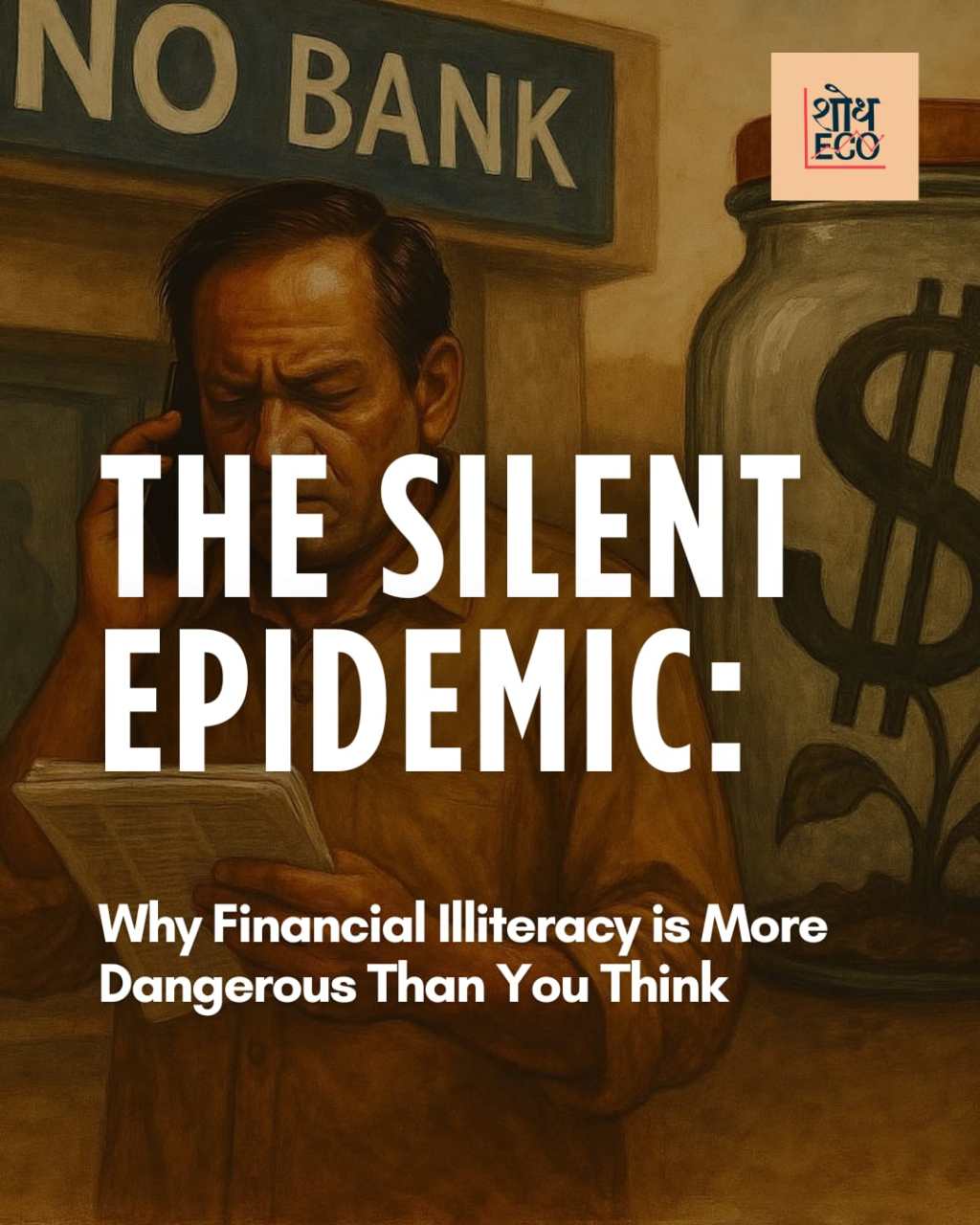
On a busy Thursday morning, Jagdish Patel, a textile businessman was sipping tea while reading a newspaper. He was all set for another forgettable day at work. A 52-year-old textile trader, who spent over two decades building his little empire, has been exporting fabric to Mumbai and Delhi for 3 years now. In the busling lanes of Surat, Patel was admired for his 2 decade long consistency and dedication. Nevertheless, Patel had a blind spot. All these years, he was operating all his business funds in a single bank: NO Bank. Oblivious to the fact that he was walking on the rim of the pickle jar.
From a corner of the living room, he heard his phone ringing. He stood up firmly, and received the call. His supplier from Ludhiana was demanding ₹40 lakh for the latest fabric stock. Patel talked to all his suppliers and customers with a confident and enthusiastic attitude. He conversed with suppliers with that same energy. And as soon as he hung up the call, he received a notification which struck him like lightning.
“NO Bank has collapsed. RBI has restricted withdrawals to ₹50,000”
His finances were locked in NO Bank. He had a ₹1.8 crore working capital account. An FD of ₹75 lakh. Salaries for 30 employees managed through NO Bank.
Patel was shaken to the core. He rushed to the bank for assistance, but even the staff appeared just as helpless. His cheques were bounced, major payments were stuck, salaries were on hold. Before he knew it, Patel saw himself sunk deep into the pickle.
Let’s step back to understand why such disasters occur. According to a saying in Marathi, “Zero information is always better than half information”. In terms of Financial literacy—zero information is just as fatal as half information. As per the Organisation for Economic Co-operation and Development (OECD), Financial literacy is a combination of financial awareness, knowledge, skills, attitudes, and behaviors necessary to make sound financial decisions and ultimately achieve individual financial well-being. Currently reported , only 33% of the population is financially literate . According to SEBI’s Investor Survey, over 76% of Indian adults lack financial literacy. A large part of the population is found not to be well versed with basic financial concepts like inflation, interest rates, or debt management , which means most of them don’t really understand how appropriate the national budget is for them or is it morbid. To understand the part most necessary for them to ascertain in a national budget which is how the national budget will be allocated for the welfare of their tummies, basic financial literacy is very essential for that.
Financial illiteracy affects millions but yet a few acknowledge it. Its symptoms are visible, but causes remain hidden. People blame the banks for frauds but never question their own lack of knowledge of finance . Poor investment decisions lead to financial loss, yet people see it as bad luck rather than lack of education. Time value of money (TVM), risk vs. return, emergency fund, good debt vs. bad debt, credit score, taxes (income tax, capital gains, GST, etc.), Budgeting (50/30/20 Rule) – A method to manage expenses, and most importantly – diversification.
Patel stood outside the NO Bank branch, his palms sweaty. His suppliers were calling him non-stop, his employees were waiting for salaries on the other side, but his money was frozen. Patel never thought about bank diversification. If he would’ve diversified his earning and savings in different accounts in different banks , all the chaos which ensued afterwards would’ve never occurred in the first place.
Blinded by panic, Patel made a catastrophic move. A loan shark in Surat offered him ₹50 lakh at an extortionate 5% monthly interest rate. Desperate, Patel took it, using his factory as collateral. Meanwhile, he also sold off raw materials at a loss, just to generate immediate cash flow. His losses amounted to ₹25 lakh overnight.
A week later, NO Bank was revived by SBI and other investors. Withdrawal restrictions were lifted. Patel’s money was safe all along, but in his fear, he had already damaged his business. Yet he was trapped in a high-interest loan, eating away at his profits. His desperation and panic made him sell inventory below cost price, reducing his margins. His creditors lost trust in him due to the cheque bounces.
Within six months, Patel’s textile shop shut down, unable to recover from the losses. A business built over 20 years fell apart in a matter of days, all because he panicked and didn’t understand banking risks.
Like Patel, millions of other financially illiterate individuals, lost their fortunes in the NO Bank Crisis. Financial illiteracy is a silent epidemic which creeps up your shoulder and strangulates you without letting you have a slightest idea of it. You’ll never know, but behind your back, it’s feeding on your future.
 ShodhEco