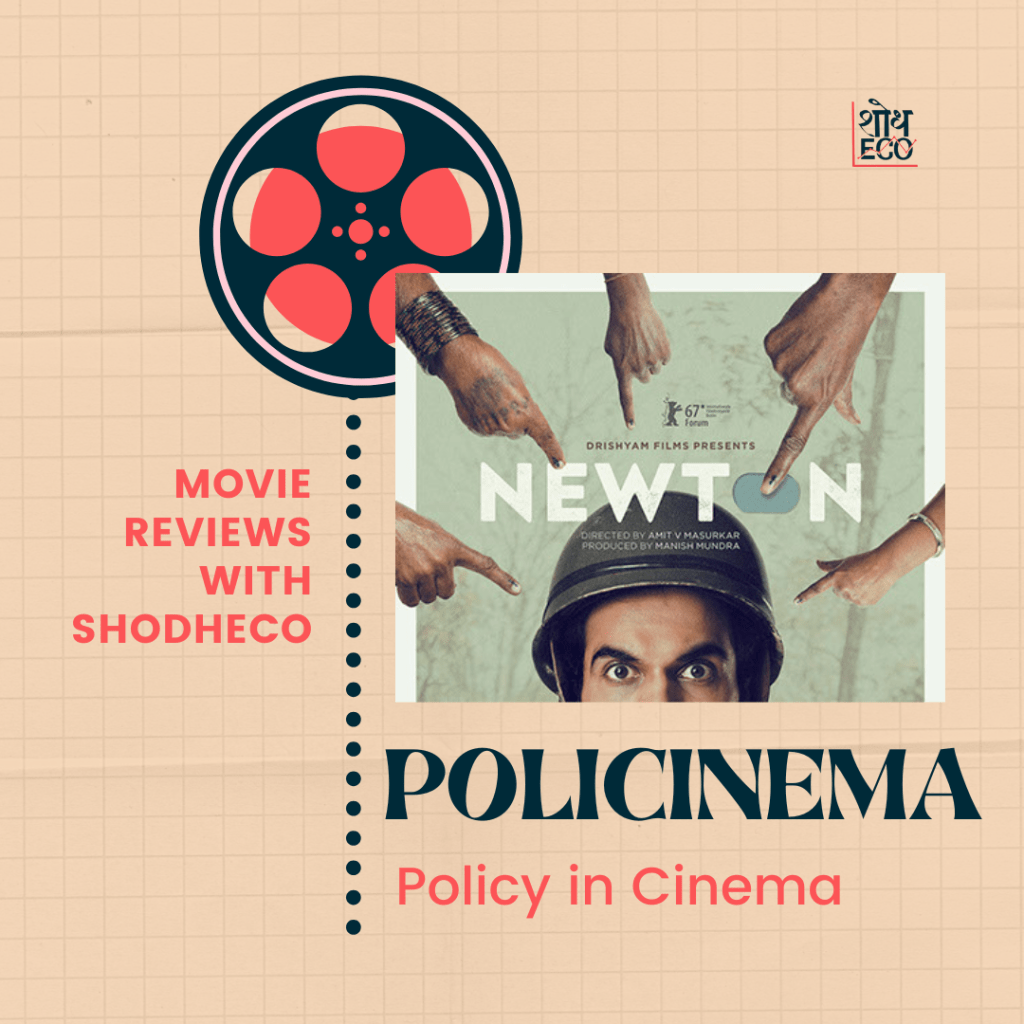

The 2017 film Newton, directed by Amit V. Masurkar, emerges as an evocative portrayal of India’s electoral framework, capturing the complexities and contradictions inherent in conducting elections in a diverse and often polarized society. Set in the remote, Naxal-affected regions of Chhattisgarh, the film revolves around Newton Kumar, a principled government clerk played by Rajkummar Rao, who is assigned election duty. His steadfast commitment to democracy and unwavering adherence to rules starkly contrasts with the pragmatism of Aatma Singh, a seasoned Central Reserve Police Force (CRPF) officer portrayed by Pankaj Tripathi.
In the current socio-political context, especially in Maharashtra’s election season, the film gains renewed relevance, offering insights into the layered dynamics between various stakeholders in India’s democratic process.
Three Parallels at Play
The narrative weaves three distinct yet intersecting perspectives:
- The Tribals: Representing a marginalized community living in socio-political and economic neglect, their indifference and lack of awareness regarding elections reflect systemic gaps in electoral literacy and inclusion.
- The CRPF: Tasked with maintaining order in a volatile environment, they navigate the dual burden of ensuring security and managing logistical challenges. Aatma Singh embodies the CRPF’s practical approach, balancing duty with the ground realities of life in conflict zones.
- Newton: An embodiment of idealism, Newton exemplifies the diligent government servant, determined to uphold the democracy, often at odds with the dynamic realities of the region.
The Clash of Idealism and Pragmatism
Newton’s uncompromising dedication to conducting free and fair elections sets the stage for conflict. His rigid interpretation of duty blinds him to the socio-cultural setup of the region, where years of marginalization and systemic apathy have eroded trust in institutions. Aatma Singh, on the other hand, serves as a counterpoint, grounding Newton’s idealism in the harsh realities of his environment. He is acutely aware that once the election concludes, it is the CRPF that must continue safeguarding these volatile territories.
The film explores the friction between Newton’s rule-bound idealism and Aatma Singh’s pragmatic approach. When Newton, in his fervour, ventures into tribal settlements on election day to urge participation, he encounters apathy and confusion. Many villagers, unfamiliar with the concept of voting or the functioning of an Electronic Voting Machine (EVM), remain disengaged. This highlights a critical gap in electoral education and infrastructure, raising questions about the inclusivity and efficacy of democratic processes in such regions.
A subplot involving a foreign journalist highlights the performative aspects of democracy. To project successful grassroots electoral participation, Aatma Singh coerces a handful of villagers to appear at the polling booth. This act, though superficially fulfilling the mandate, masks the deeper socio-political adversities faced by the tribal community. The scene is symbolic of the policy disconnect between the central vision of democracy and its ground implementation.
Newton’s unwavering insistence on protocol leads to a confrontation that results in physical violence against him by the CRPF. This act serves as a stark reminder of the limitations of rigid governance structures. The film subtly critiques the inflexibility of policy frameworks that fail to adapt to ground realities, emphasizing the need for a dynamic, context-sensitive, regional peculiarities-based approach to public policy.
Newton, Democracy and Policy
Newton is more than a film; it is a reflects on the challenges of sustaining a functional democracy in a nation as diverse as India. It underscores the importance of experiential learning like that of Newton in shaping public policy. While the film highlights the Election Commission’s commendable efforts to bring polling to the remotest areas, it also exposes the systemic gaps that hinder people’s participation. The crossroads where these three perspectives—tribals, security forces, and election officials—intersect needs stabilization through informed and inclusive policy interventions. Bridging the gaps between idealism, pragmatism, and lived realities is essential for building a robust democracy. It is a a reminder of the work that lies ahead in ensuring every vote counts, every voice matters, and every citizen’s stand is accounted for
 ShodhEco