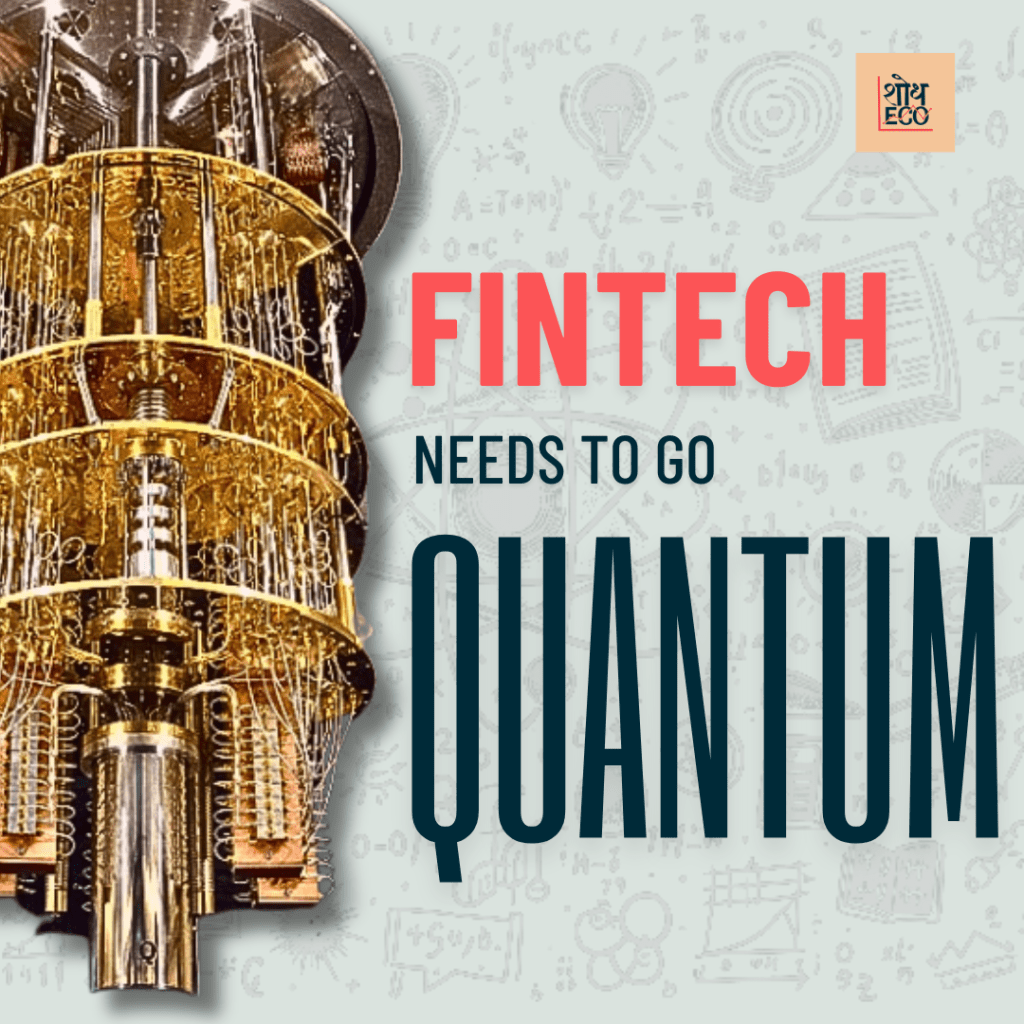

Would you believe, if I tell you the market predictions my computer generates are so impeccable that I might never lose a dime or it gives me weather reports precise enough to outrun an earthquake way before any Richter’s scale could sense anything? That’s the Quantum computer, dear readers. As a myth goes, a quantum computer is just an advanced version of a conventional computer, which is rather an inaccurate consideration. A quantum computer is an ultra modern concept, way different if compared to our classical computers. A classical computer uses bits which can be 0 or 1 and a quantum computer uses qubits which can be 0 or 1 or both of them at the same time. Well, in classical computers’ set up these bits are inside transistors which are like switches where 0 means ‘off’ and 1 means ‘on’ and there are billions of these transistors which work at the speed of electricity. Research over the years shows that an atom can be the smallest transistor in the world and atoms have the capability to be present in two places at the same time. This specific characteristic of an atom grants quantum computing a superposition.
Here’s a simple explanation to understand the functioning of a quantum computer:
Let’s consider there’s a maze, a normal computer would check each path one after one until it reaches the center. A quantum computer instead would explore all the paths at the same time. Because it works on the principles of superposition. With the incessant uncertainty exhibited, it holds the potential to be the future encryption technology of Fintech.
Big banks such as Goldman Sachs, JP Morgan, CBA, Barclays, RBS, and Allianz appear to be investing significantly in quantum computing technology. Because of its uncertainty quantum computers can be used to produce secure and strong keys to protect our financial and personal data.
Quantum computers possess the ability to break codes of the classical computers which means someone with a quantum computer can hack into crucial financial data and personal information within a few minutes or maybe even seconds.Security measures like post quantum cryptography are under development, these algorithms if developed would provide resistance against phishing. Another measure is quantum key distribution (QKD), which works on the principles of quantum mechanics to dispense encryption keys securely. QKD can be used in conjunction with PQC to facilitate even stronger security guarantees. Both of these technologies are undergoing rigorous training and standardization to ensure safety and security in the quantum computing era.
Hence,quantum computing, if used to safeguard the data in the fintech industry, would be a revolutionary step towards a more secure financial wellbeing but if used against the fintech industry, that might result in catastrophe for the finance industry. The capacity of quantum computers is fathomless and it might welcome a breeze of revolutionary change not only in the fintech industry but all other industries as well.
 ShodhEco