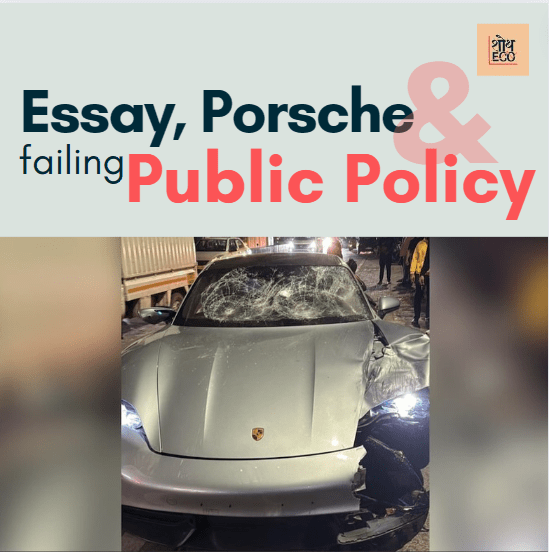

On the fateful day of May 19th, tragedy struck in Pune, claiming the lives of two innocent IT professionals. What ensued was a barrage of assumptions, narratives, and media scrutiny surrounding the hit-and-run case, flooding both national and local newspapers, as well as social media platforms. However, amidst the sensationalism, it is imperative to delve into the realm of public policy implementation, which evidently faltered in this case.
A cursory examination of the incident reveals glaring deficiencies in the judicial response. The initial decision to mandate the involved juvenile to pen an essay reflects a tepid approach towards instilling deterrence through stringent legal measures. To avert future calamities of this nature, it is imperative to mete out proportionate punishments to the accused, thereby fostering a culture of accountability and responsible social conduct.
The Motor Vehicles Act, when juxtaposed with the Indian Penal Code, stipulates that the treatment of minors is contingent upon the gravity of their transgressions. While these legal nuances may elude the comprehension of laymen, the overarching expectation of justice remains palpable. However, the ludicrous gesture of assigning an essay to the juvenile underscores the inequity inherent in the dispensation of justice, potentially eroding public trust in the judiciary.
The initial actions in this case underscore a marked erosion of moral and ethical standards within the state apparatus. The inclination towards leniency, devoid of substantive consequences, betrays a glaring lack of accountability towards the victims and their bereaved families.
Yet, amidst the clamor for justice, it is imperative to not succumb to public outrage. The pursuit of justice is a quintessential attribute of the state, and any deviation from this principle constitutes a failure of public policy. Society emerges as the primary stakeholder in such matters, with these incidents leaving a profound impact on public sentiment. Ignoring or manipulating this sentiment only serves to exacerbate wounds, inevitably leading to further outcry.
Moving forward, the rehabilitation of the accused juvenile into mainstream society must be approached with nuance and sensitivity. While reintegration is essential, it must be accompanied by a genuine acknowledgment of wrongdoing and a commitment to personal growth and redemption. Only then can justice be truly served for the departed souls.
 ShodhEco