Author: Rushikesh Mule
When the panchayat raj is established public opinion will do what violence can never do – Mahatma Gandhi
We celebrate panchayati raj day on 24th April of every year since the inception of Panchayati Raj Institutions (PRIs) act on 24th April 1993. The citizen’s charter of The Ministry of Panchayati Raj (MoPR) mentions Panchayats as corner stone of local self governments and people’s participation in governance. On the 31st Panchayati Raj day we try to give you an overview of the performance of PRIs over last 30 years.
Finances of PRIs
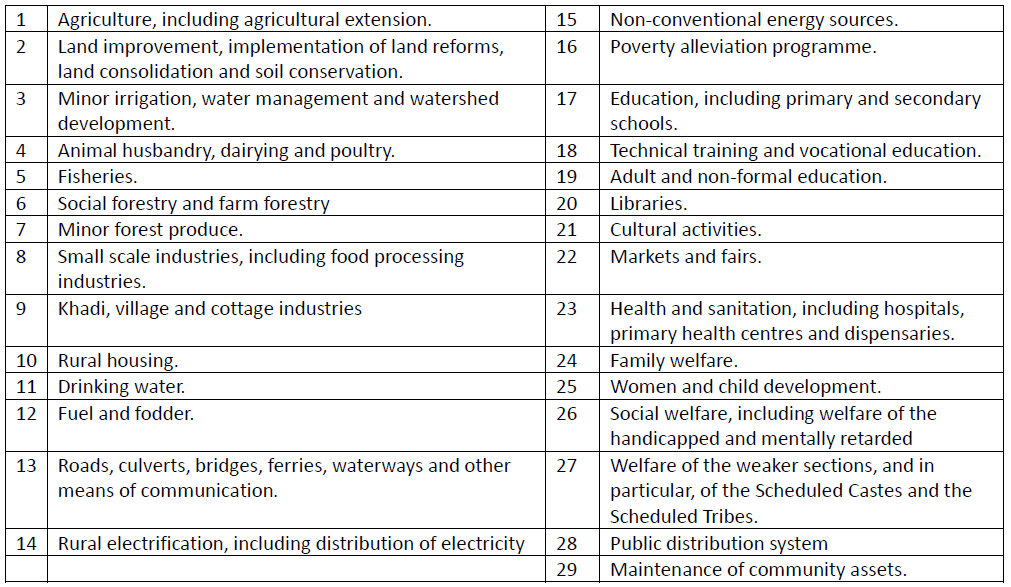
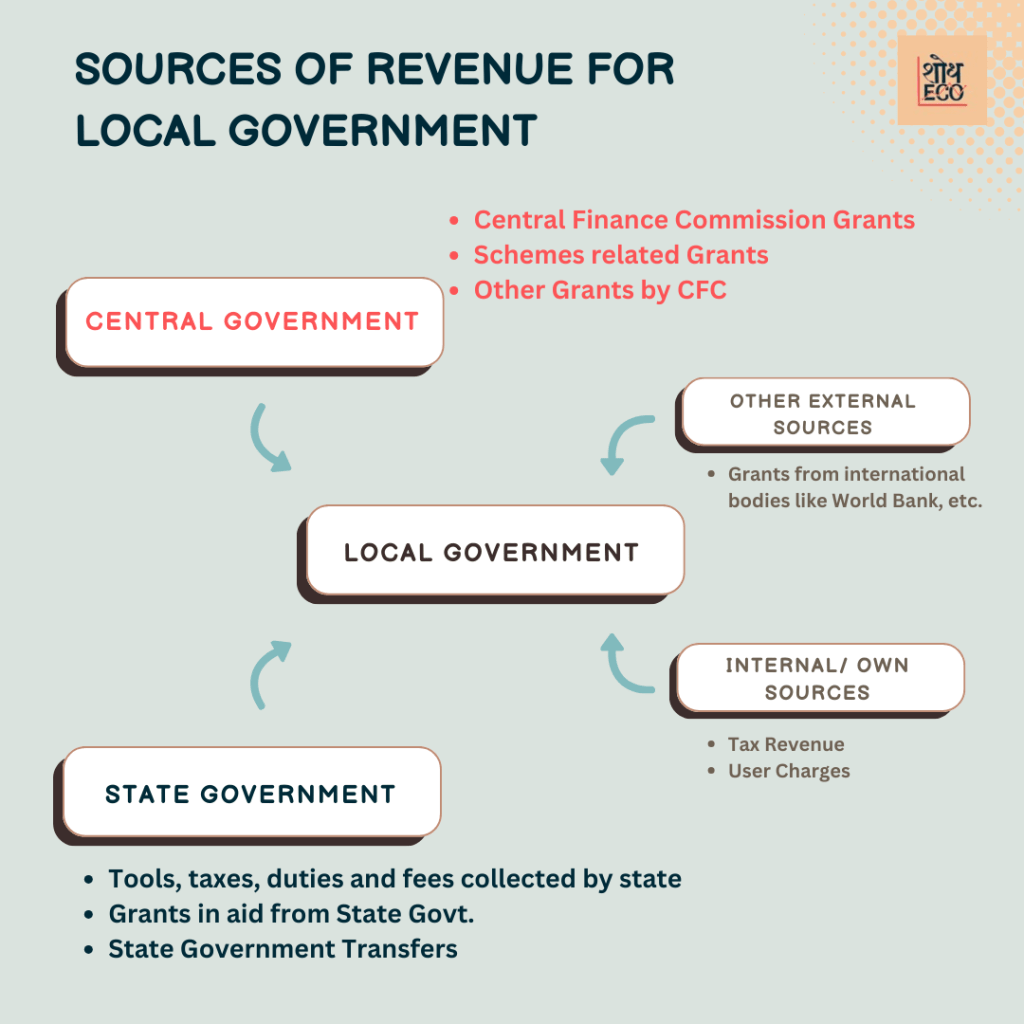
In 1992, the 73rd amendment introduced 29 subjects for which Panchayats were entrusted with the responsibility of devising and executing plans aimed at fostering local economic development and social justice. However, the PRIs ability to workout these responsibilities depends on their limited financial resources. Following info-graph shows the sources of revenue for Panchayats.
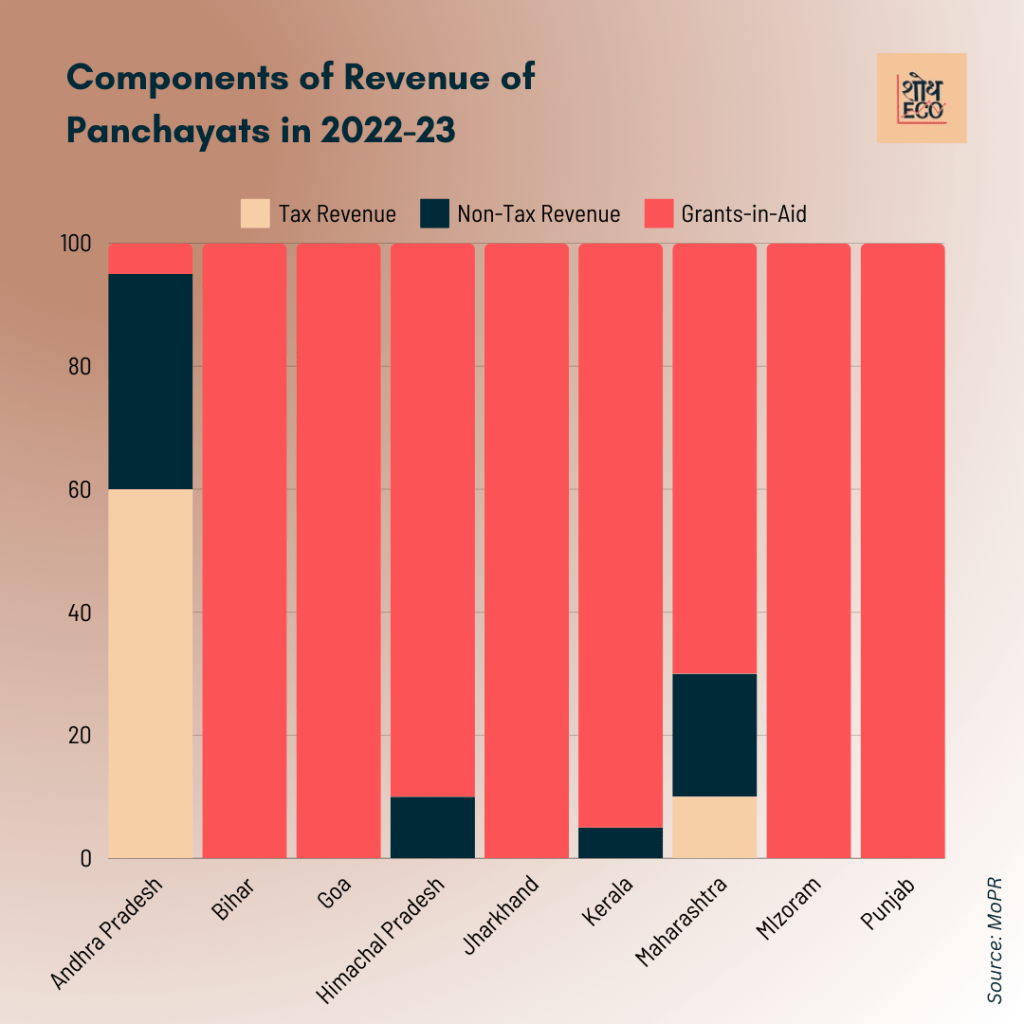
Focusing on revenue generation side, first the PRIs don’t have substantial tax sources except property tax and second, PRIs face several challenges in raising local taxes such as limited tax base, shortage of infrastructure and trained staff, because of this, PRIs are heavily relied on transfers provided by state governments. Following graph supports this argument portraying heavy reliance of PRIs on grants in aids. However, it is necessary to increase the share of PRIs tax and non-tax revenue for the improvement of services provided.
Women’s representation
The 73rd amendment Act 1993 reserved one-third seats for women in PRIs and today we have 44.4% of elected local government representatives as women which is the highest in the entire world. However, the Elected Women Representatives (EWRs) do face several challenges that are worth discussing. Studies have shown that EWRs are largely undervalued and neglected even though their performance is better that male counterparts.
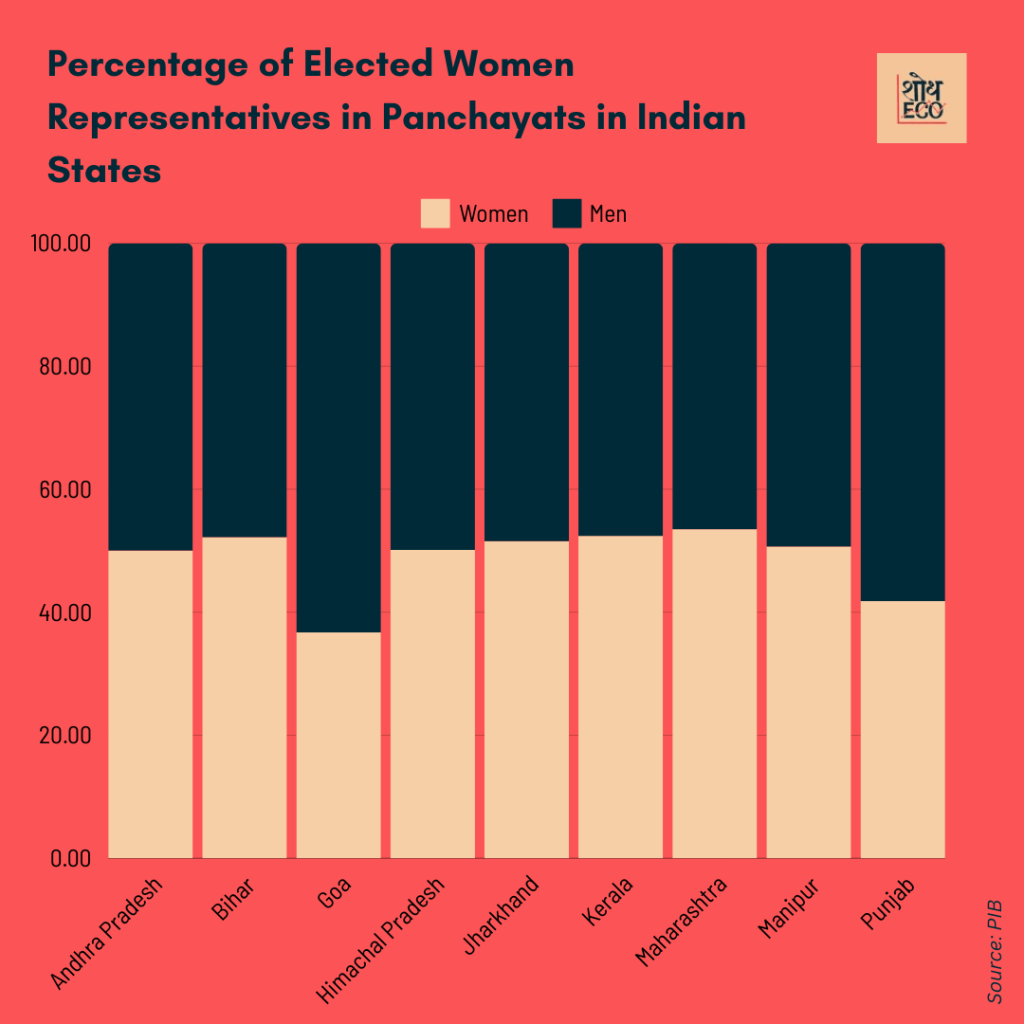
A 2004 study in Haryana found that female Sarpanches faced difficulties in performing their duties due to Purdah system and social restrictions derived from it. Also the general trend in EWRs show that they are less educated than male counterparts, predominantly married and first-time candidates with no training and experience. These are some of the reasons why the female candidates do not get re-elected.
Despite all of this, the resilient women have shown that political representation can be achieved in efficient manner. We see emergence of all-women PRIs in different states such as Manje Raj Panchayat at Indapur and Kultikri Gram Panchayat under Jhargram. A 2010 study across 11 states found that women-led villages saw improved delivery of services with lower levels of corruption. Greater investments were made in services like water infrastructure, sanitation, education, and roads, which were important to the community, especially women.
Technological Aspects:
MoPR launched the eGramSwaraj portal on April 24, 2020. Objective of this portal was to enhance application with latest technology and design Key Performance Indicators (KPIs). eGraamSwaraj is used for finance and accounting, profiling, reporting and geotagging of PRIs. This application could register a user base of more than 2.7 lakh PRIs since its inception. The key target groups of eGramSwaraj are local bodies, line departments and citizens respectively. It helps local bodies to keep track of their businesses while helping citizens to be more vigilant of the status of the progress and development in their region. However the eGramswaraj portal is relatively new and needs to incorporate lot more features.
In the end it can be said that PRIs have played a crucial role in upholding the true spirit of local governance in India. Over the past 30 years, PRIs may have faced several challenges but despite this, they have made significant strides toward local self governance. As we celebrate the Panchayati Raj week lets acknowledge the roots from which the PRIs emerged in India and celebrate the rural local self-governance while keeping in mind that we need to make PRIs more resilient and future ready.
 ShodhEco